
Tokushukai Medical Big Data
Putting Medical Big Data to Work
Tokushukai Medical Database
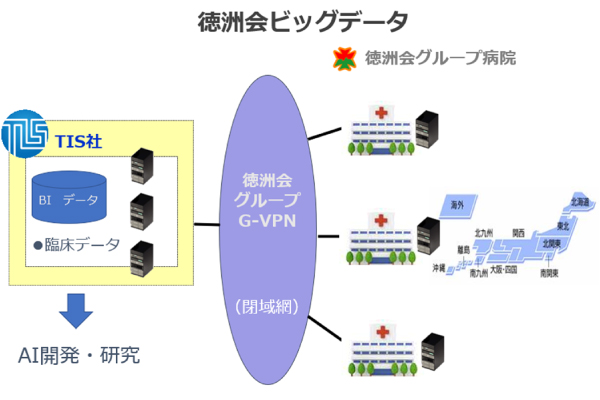
The Tokushukai Group manages medical data on more than 14 million patients from 72 hospitals through the Tokushukai Medical Database (TMD). TMD is a collection of electronic medical record databases at individual hospitals, rather than a single large database such as a data warehouse.
Tokushukai also works with companies on research and AI development, using data extracted from TMD. TMD allows efficient extraction of medical, management and clinical data, including laboratory results and images for inpatients and outpatients. Recent COVID-19 research involving Tokushukai has used chest CT images and vital signs recorded on admission, extracted from TMD.
In 2022, Tokushukai established the Clinical Decision Support System Committee for Using Tokushukai Medical Database (CDSS Committee). The committee has begun using clinical and other data to consider and build clinical decision support systems aimed at improving internal operations. Since 2011, Tokushukai has also provided data to MID-NET®, the national medical information database infrastructure project. The Group has focused on hospital-based cancer registration since 2005. At a time when one in two Japanese people develops cancer and one in three dies from it, approximately 20,000 cancer registrations are added at Tokushukai each year. Through its nationwide network and a common format, Tokushukai also contributes to regional cancer registries.
Data Available in TMD
The following is a brief introduction to the data held in TMD.
Period: 2013–2022 (10 years)
Facilities: 68 Tokushukai hospitals
Inpatients and Outpatients by Tokushukai Group Region (6.68 Million Patients)
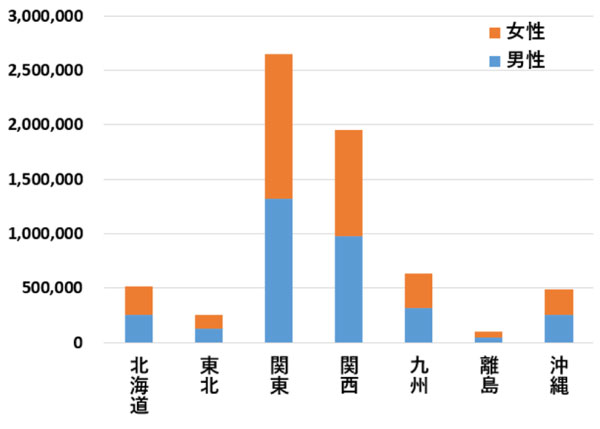
Aggregated using the Tokushukai Group's regional codes.
Total Inpatient and Outpatient Counts by Diagnosis
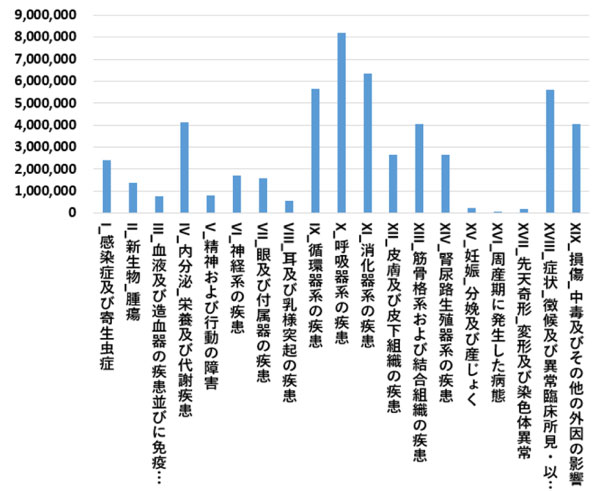
Aggregated using the major categories of ICD-10, the 10th revision of the International Classification of Diseases.
Total Inpatient and Outpatient Prescriptions by Therapeutic Class
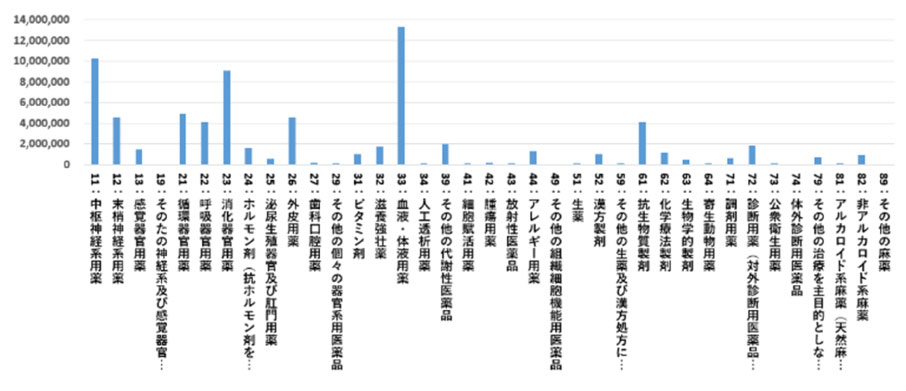
Aggregated using the major categories of Ministry of Health and Welfare codes.
Total Inpatient and Outpatient Procedures by Surgical Method
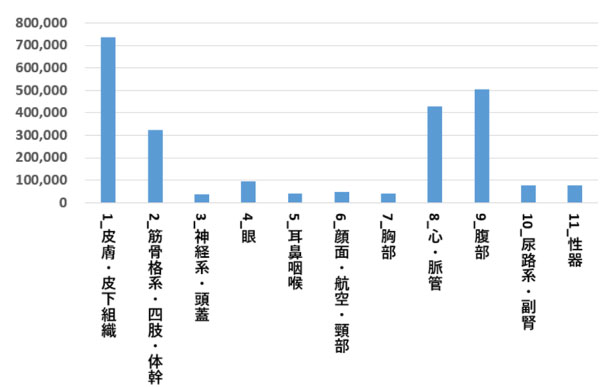
Aggregated using the major categories of surgical K codes.
Domain-Specific Databases in TMD

TMD Data Overview
| Data Source | Availability |
|---|---|
| DPC (Form 1) | Available |
| DPC (EF files) | Available |
| Medical claims | Available |
| Dental claims | Unavailable |
| Pharmacy claims | Unavailable |
| Electronic medical records (test results) | Available |
| Electronic medical records (orders) | Available |
| Health screening data | Available |
| Registries | Unavailable |
| CT, MRI | Extraction can be requested from the imaging vendor (additional fees apply). |
| Other | Please contact us. |
For information on age distributions, medications, drug master data, vaccinations, procedures, tests, test master data, patient characteristics, vital signs, insurance information and other TMD data, please see
the Japanese Society for Pharmacoepidemiology's detailed survey of databases in Japan applicable to clinical epidemiology and pharmacoepidemiology.
Examples of TMD Use in National Projects
Research
Academic research using TMD is increasing each year. TIS supports research by extracting and providing data recorded in routine care according to researchers' requirements.
- 2020: Development and validation of a machine-learning model to predict the effects of medications in patients with acute heart failure.
- 2020: Development of a data linkage infrastructure to support drug development for respiratory diseases, including COVID-19.
- 2020: Study of the association between preoperative renal function and postoperative outcomes in patients undergoing emergency colorectal surgery [1]. Data included blood tests and vital signs for 3,002 emergency colorectal surgery patients at 38 Group hospitals participating in the DPC system during 2010–2017.
- 2020: Study of the prevalence of hyperkalaemia in approximately 40,000 maintenance dialysis patients, using data extracted from 61 Group hospitals for 2010–2019 [2].
- 2021: Validation of an algorithm to identify rheumatoid arthritis from medical claims data [3]. A random sample of 19,734 patients was selected from 1.6 million people who visited 64 Group hospitals between February 2018 and January 2019. Of these, 334 met the proposed definition of possible rheumatoid arthritis and were independently assessed by two rheumatologists.
- 2021: Effects of DPC and blood test data on perioperative complications and outcomes: a retrospective cohort study using TMD.
- 2021: Study of the effectiveness of the Ronapreve™ intravenous infusion set in hospitalised COVID-19 patients.
- 2022: Analysis of predictors based on coagulation activation markers in patients receiving extracorporeal membrane oxygenation (ECMO).
- 2022: Study of the feasibility of using Japanese hospital electronic clinical information and cancer registry data for post-marketing surveillance in oncology.
- 2023: Study of relationships between long COVID incidence, age, viral variants, vaccination rates and other factors, using more than 120,000 COVID-19 cases from TMD [4,5].
References:
- 1) Miyake K, Iwagami M, Ohtake T, et al. Association of pre-operative chronic kidney disease and acute kidney injury with in-hospital outcomes of emergency colorectal surgery: a cohort study. World J Emerg Surg 15, 22 (2020). https://doi.org/10.1186/s13017-020-00303-6
- 2) Kobayashi S, Iwagami M, Mogalli R, et al. Hyperkalemia in Japanese patients undergoing maintenance hemodialysis : ELEMENT-HD, a real-world evidence study. Journal of Japanese Society for Dialysis Therapy 2020;53(Supplement 1): 352.
- 3) Kubota K, Yoshizawa M, Takahashi S, et al. The validity of the claimsbased definition of rheumatoid arthritis evaluated in 64 hospitals in Japan. BMC Musculoskelet Disord 2021;22(1):373.
- 4) Kinugasa Y, Llamas-Covarrubias A. M, Ozaki K, et al. Post-Coronavirus Disease 2019 Syndrome in Japan: An Observational Study Using a Medical Database. Japan Medical Association Journal, 2023: 1-10. [DOI: 10.31662/jmaj.2023-0048]
- 5) “Investigating causes through analysis of 120,000 cases held by Tokushukai.” Tokushukai newspaper, 24 July 2023. https://www.tokushukai.or.jp/media/newspaper/1399/pdf/1399_01.pdf (accessed 1 August 2023).
Data Provision Projects
| Project | Total Records | Tokushukai Records | Notes |
|---|---|---|---|
| MID-NET(PMDA) | 6 million | 3 million | 200 standardised laboratory test items |
| Currently provided by 10 facilities | |||
| An additional 10 facilities scheduled for 2024 | |||
| Millennial Medical Record | 10 million | - | Only three hospitals participate |
| AI Hospital | - | 1,600 cases | Provision of COVID-19 images and other data |
Examples of Medical AI Infrastructure Initiatives
| Project | Notes |
|---|---|
| Healthcare AI Platform Collaborative Innovation Partnership (HAIP) | Established on the basis of the national Cross-ministerial Strategic Innovation Promotion Program. Supports infrastructure for AI development. |
| Tokushukai CDSS Committee (Clinical Decision Support System Committee for Using Tokushukai Medical Database) |
Promotes systems and AI for GAPS, NEWS, doctors' work style reform and other initiatives. |
| Tokushukai Medical Strategy Office | Considers healthcare DX strategies, including strengthening the Tokushukai brand through academic activity, improving physician recruitment and education, and using clinical big data and AI to improve operations and drive innovation. |
Use in the Cardiovascular Surgery Case Database
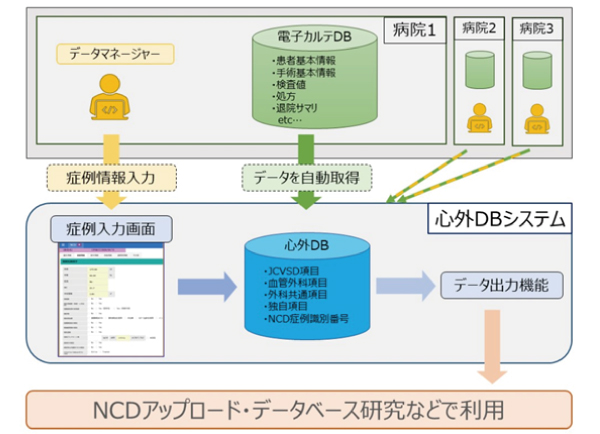
TMD includes a cardiovascular surgery case database containing detailed case information. It combines data automatically retrieved from electronic medical records with information entered by data managers at each hospital through a dedicated system.
In addition to local use, the case information is based on the items required for registration in the National Clinical Database (NCD), so the system also assists with NCD registration. Future plans include using it for database research in cardiovascular surgery.
Using TMD
We aim to make TMD available to many researchers so that it can generate knowledge that benefits patients. Please contact us to discuss your case-based research needs.
Example of a Typical TMD Research Process
- Initial consultation
- Feasibility assessment
- Preparation of a research protocol
- Ethics review (our Group conducts ethics review before research and data provision)
- Provision of data
- Conducting the research
Contact Us
Contact the Tokushukai Information System Department to discuss using TMD.
Contact Us by Phone
06-6346-2821
Weekdays, 9:00–17:00 (development team)