
A Group-standard system to unify EMR and dialysis information: Tokushukai's dialysis committee holds its national meeting
About 100 doctors, nurses, clinical engineers and other professionals attended the Tokushukai dialysis committee's two-day national meeting from 11 March. Participants agreed to develop a Group-standard dialysis system integrating EMR and dialysis information, with the aim of further improving care and operational efficiency. They also exchanged information and discussed infection prevention, water quality management, patient safety, kidney transplantation and Tokushukai's support for establishing dialysis centres in Africa.
Using data from 4,700 patients
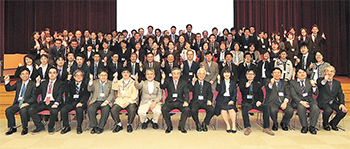 Dialysis professionals gather from Tokushukai hospitals across Japan
The meeting was held at iMEP, medical equipment manufacturer Nipro's training centre in Kusatsu, Shiga. Tokushukai invites healthcare staff from African countries planning dialysis centres to train at Group hospitals and, with Nipro's cooperation, provides practical equipment training at iMEP. The venue was chosen partly to allow Group dialysis staff to visit the facility.
In his opening remarks, dialysis committee chair Shuzo Kobayashi, Deputy Director of Shonan Kamakura General Hospital in Kanagawa, said: “Some people tell patients about to start dialysis that they are unfortunate, but I disagree with that view. Starting dialysis is not the end of life. There are limitations, but it is the beginning of a new life in which people can eat well, stay active and take on new challenges.”
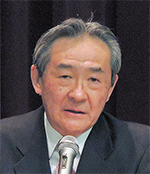 Deputy Director Kobayashi urges participants to review guidelines and ensure rigorous safety management
He encouraged active discussion: “Please reconsider the fundamentals: thorough safety management based on the Japanese Society for Dialysis Therapy guidelines, adequate dialysis and nutrition, and helping patients broaden their lives.”
The proposed Tokushukai standard dialysis system attracted particular attention. The Group currently uses systems from several manufacturers. With Nipro's advanced system, mainly used at hospitals with many dialysis beds, patient information and dialysis data are split between the EMR and dialysis systems and cannot be managed together.
Noriyuki Takahashi, Head of Implementation Management at Tokushukai Information System, Inc. (TIS), outlined current system use, the proposed design, the development structure and the schedule. Shonan Kamakura and Shinjo Tokushukai hospitals then described their current operations, followed by a presentation from Nipro.
During a panel discussion, speakers highlighted the potential: “Tokushukai hospitals provide dialysis for approximately 4,700 patients, with a total of 62,000 sessions each month. Bringing this data together for analysis and use could change healthcare around the world.”
Hisamune Honma, Head of Clinical Engineering at Shonai Amarume Hospital in Yamagata and chair of Tokushukai's clinical engineering committee, asked participants to confirm their position. They unanimously agreed to proceed. A project team will be formed within the dialysis committee and meet about monthly. After specifications are finalised, a pilot hospital could begin trial operation as early as the end of the year.
On patient safety, Shonan Kamakura, Sapporo Higashi Tokushukai and Chubu Tokushukai hospitals presented measures to improve dialysis unit safety. For infection prevention, results of a prior survey were presented on influenza precautions, whether prophylactic antivirals were used and the criteria for their use.
Guidance was also provided on preventing infection at puncture sites in arteriovenous fistulas, veins connected to arteries to provide sufficient blood flow for haemodialysis. Discussion led to agreement on developing Group-wide criteria for prophylactic medication. Participants also proposed that staffing calculations for dialysis units at large hospitals should account for patient severity as well as numbers.
On support for dialysis in Africa, Kobayashi reviewed current activities and outlined plans to establish a comprehensive kidney care programme, including transplantation, initially in Tanzania as a step towards kidney transplantation in Africa.
Other presentations covered pyogenic vertebral infection in dialysis patients, use of intermittent infusion haemodiafiltration (iHDF) and online haemodiafiltration (HDF), kidney transplantation at Shonan Kamakura, and the importance of centralised dialysis water management. Participants toured iMEP at the end of the first day.
Source: Tokushukai Newspaper, 17 April 2017, No. 1078