
Advancing the “Ai medical record” concept to support the best possible care
Tokushukai Information System, Inc. (TIS) has outlined its “Ai medical record” concept for next-generation healthcare systems using AI. It would combine medical history, presenting complaints, images, test results and literature to support diagnosis and the selection of appropriate treatment. President Katsuhiko Ozaki discussed the concept.
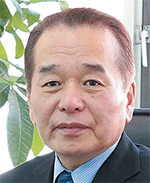 President Ozaki: “AI will become indispensable to hospital operations”
AI can be broadly grouped into applications for language, images, speech, control, and optimisation or reasoning. Language AI can analyse text and convert words in medical records into structured data. Image AI can, for example, identify cancer in endoscopic images or abnormal shadows on chest X-rays. Speech AI can recognise and transcribe patients' spoken responses during medical interviews. Control AI can support functions such as controlling the robotic arms of the da Vinci surgical system.
Ozaki emphasises: “I believe optimisation and reasoning will be key in the future.” This type of AI acts as an inference engine to address complex problems.
The Ai medical record concept incorporates optimisation and reasoning AI into EMRs. It brings together tools that transcribe and structure medical interviews, support diagnostic imaging and histopathology, and search medical literature. Together they would assist doctors' diagnoses and help select appropriate treatment using literature and clinical trial information.
“Image AI, speech AI and other applications are being tested or are already in practical use. Combining them to support each patient from several perspectives will form the next generation of hospital systems,” Ozaki explains. “Tokushukai aims for a society where anyone, anywhere, at any time can receive the best possible care. AI can help us move closer to that ideal.”
AI can also reduce staff workloads. For example, if patients use a smartphone app before visiting to check which specialty to consult and how urgent their condition may be, reception can run more smoothly and waiting times may be reduced. “Smartphone ownership is rising every year. It is important to build systems that reflect the times,” says Ozaki.
Mapping patients' addresses and combining them with weather forecasts, influenza trends and other data could also help predict outpatient attendance. This would support better staffing, reduce waste and improve management.
One challenge is structuring the language used in medical records. If one doctor writes “diabetes mellitus” and another “DM”, the variation makes big data harder to use. A trial using templates to record findings on arrival has therefore begun in the emergency department at Sapporo Higashi Tokushukai Hospital.
Ozaki says: “Tokushukai's AI cannot advance without doctors' cooperation. I believe AI will become indispensable to hospital operations.”
Source: Tokushukai Newspaper, 3 September 2018, No. 1149